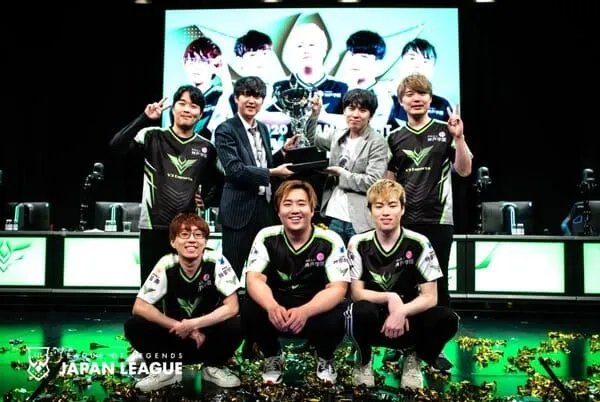
For the bigger picture and full context, make sure you read our main guide on League of Legends Japan: Changes in the Pro Scene.
Okay, I'm ready to craft a detailed cluster article focusing on the restructuring and changes within LoL Japan, adhering to all guidelines and constraints.
markdown
The landscape of League of Legends esports is constantly shifting, and few regions have seen as much change as lol japan. Understanding these shifts is critical for aspiring pros, team managers, and even dedicated fans who want to stay ahead of the curve.
At a glance:
- Understand the LJL's integration into the PCS and LCP structures.
- Learn about the new league format and split structure for the 2025 season.
- Grasp the opportunities and challenges facing Japanese LoL teams.
- Explore the format of each split and the LJL Finals tournament.
- Discover the teams that are shaping the future of LoL Japan.
Drastic Changes: LJL's New Role in the Asia-Pacific Ecosystem
For years, the LoL Japan League (LJL) operated as its own entity. However, recent changes have fundamentally altered its place within the broader Asia-Pacific League of Legends ecosystem. The most significant shift is its integration into the Pacific Championship Series (PCS) and its subsequent role as a second division to the League of Legends Championship Pacific (LCP). What does this mean for teams and the overall competitiveness of lol japan?
Previously, the LJL operated as a standalone league, largely disconnected from the upper echelons of competition until international events. Now, the top teams have a direct pathway to challenge for a spot in the LCP, the premier league in the region. This integration aims to provide more opportunities for Japanese talent to develop and compete against stronger opposition.
A Clearer Path to Pro: LJL as a Second Division
As of 2025, the LJL functions as a second division to the LCP. This isn't simply a rebranding; it's a structural change with tangible benefits. Two LJL teams get the opportunity to be promoted into the LCP. This promotion/relegation system injects a new level of intensity and stakes into every LJL split.
Think of it like this: European football has its Premier League and Championship. The Championship teams fight for promotion, and the bottom Premier League teams face relegation. The LJL now has a similar dynamic with the LCP.
What are the benefits of this system?
- Increased competition: Teams fight harder for promotion and avoid being stuck in the second division.
- Greater exposure: LJL teams gain more visibility by competing for a spot in the LCP.
- Talent development: The pressure to perform drives teams to invest in player development.
LJL Season Structure: A Deep Dive Into Splits and Point Systems
The LJL season is now structured around three distinct splits: LJL FORGE (Winter), LJL STORM (Spring), and LJL IGNITE (Summer). These splits serve as qualifiers for the coveted LJL Finals Tournament. But how does each split work, and how do teams accumulate points?
Here's a breakdown of each split's format:
| Split | Format | Key Features |
|---|---|---|
| LJL FORGE | Open Qualifiers -> Swiss Stage (BO1) -> Single-Elimination (BO1) | Focus on open participation and initial ranking, with championship points awarded based on ranking. |
| LJL STORM | Open Qualifiers -> 'Storm Switzerland' (BO1) -> Knockout Stage (BO3) | Modified Swiss stage, emphasizing quick matches and narrowing to a top 6. |
| LJL IGNITE | Open Qualifiers -> 'Bounty Stage' -> Playoffs (BO3 QF/SF, BO5 Final) | 'Bounty' system adds complexity, with playoffs determining the champion of the split. |
| Championship points earned throughout the three splits determine the top six teams that qualify for the LJL Finals Tournament, where they battle for the chance to compete in the LCP promotion tournament. |
The LJL Finals Tournament: The Ultimate Showdown
The LJL Finals Tournament is the culmination of the entire season. The top six teams, based on accumulated championship points, compete in a double-elimination bracket. All matches are best-of-five (BO5), meaning teams need to demonstrate both skill and resilience to emerge victorious.
The winner of the LJL Finals earns the opportunity to participate in the LCP promotion tournament, the gateway to the top-tier league in the Asia-Pacific region. This high-stakes tournament represents the ultimate goal for any team competing in lol japan.
Who to Watch: The Teams Shaping Lol Japan's Future
Ten teams participate in the LJL 2025. Let's take a look at some of the teams to keep an eye on.
- Burning Core Toyama: Known for their aggressive playstyle and strong team fighting.
- DetonatioN FocusMe Academy: The academy team of the most historically dominant LJL team, focused on developing young talent.
- QT DIG∞: A team with a history of upsets, known for their innovative strategies.
- REJECT: A strong contender with experienced players seeking to dominate the league.
- V3 Esports: A team with a dedicated fanbase, known for their consistent performance.
- VARREL Youth: A new team with the goal to shake up the league.
- Yang Yang Gaming: A new team that is hoping to create a legacy within the league.
These teams (and their competitors) represent the cutting edge of lol japan and will be instrumental in shaping the future of the league.
Understanding the Challenges: Why LoL Faces an Uphill Battle in Japan
While the restructuring offers new opportunities, it's essential to acknowledge the challenges League of Legends faces in Japan. Compared to other regions, lol japan has a relatively small player base.
Factors contributing to this include:
- Preference for console/mobile gaming: Historically, console and mobile gaming have dominated the Japanese market.
- Underdeveloped PC gaming market: PC gaming never gained the same traction in Japan as in other regions.
- Cultural dominance of other genres: Genres like fighting games and JRPGs have a strong cultural presence in Japan.
Despite these challenges, the integration into the PCS and LCP structures provides a significant boost for lol japan, offering increased exposure and opportunities to compete at higher levels. Here are a few options, depending on the context: * Japan's Pro Scene Changes * LoL Japan: Pro Scene Guide * Changes to Japanese LoL Esports * Japan's evolving LoL scene.
Practical Playbook: Maximizing Opportunities in the Restructured LJL
So, what does all of this mean for aspiring pros, team managers, and organizations looking to succeed in the revamped lol japan scene? Here's a practical playbook:
For Aspiring Pros:
- Focus on individual skill: The competition is fiercer than ever. Hone your mechanics, game knowledge, and communication skills.
- Network and build connections: Attend local tournaments, join online communities, and connect with established players.
- Consider joining an academy team: Academy teams like DetonatioN FocusMe Academy provide a structured environment for development.
For Team Managers: - Invest in scouting: Identify and recruit talented players who can contribute to the team's success.
- Develop a strong coaching staff: A good coach can help players improve their individual skills and develop team synergy.
- Prioritize strategic development: Stay ahead of the meta and develop innovative strategies that can give your team an edge.
For Organizations: - Support the LJL ecosystem: Invest in grassroots initiatives and community events to grow the player base.
- Partner with local businesses: Secure sponsorships and partnerships to support your team and organization.
- Embrace the integration with the PCS and LCP: Focus on developing a team that can compete at the highest levels.
Quick Answers: Addressing Common Questions and Misconceptions
Q: Is the LJL still relevant now that it's a second division?
A: Absolutely. The LJL is now more important than ever as it serves as a direct pathway to the LCP, providing Japanese teams with increased opportunities to compete at a higher level.
Q: How can a team from the LJL qualify for international tournaments like Worlds?
A: By winning the LJL Finals and successfully navigating the LCP promotion tournament to secure a spot in the LCP, they can then compete within the PCS/LCP structure for slots at international events.
Q: What are the biggest challenges facing lol japan in the future?
A: Overcoming the historical preference for console/mobile gaming and building a larger player base are key challenges.
Actionable Close: Seizing the Opportunities in the New Lol Japan
The restructuring of lol japan presents both challenges and opportunities. By understanding the new league format, the key teams, and the factors affecting the region's growth, players, teams, and organizations can position themselves for success. The path to the top is now clearer than ever – are you ready to take it?